| Posted on June 13, 2013 at 8:30 AM |
comments (0)
|
It was a bizarre coincidence that I was reading Vince Zandri's Pathological crime fiction e-book last night when I noticed this post by crime author/criminologist Jennifer Chase. Chase explains the differences, criminally speaking, between psychopaths and sociopaths.
These are two words that come up quite a bit in crime fiction, but as this recent post on Do Some Damage points out, there's little understanding of what those mental health conditions mean. I admit that I've faltered in this area myself, having portrayed both a psychopath and an addict in my crime thriller novel, Cleansing Eden: The Celebrity Murders, without doing a ton of research on either.
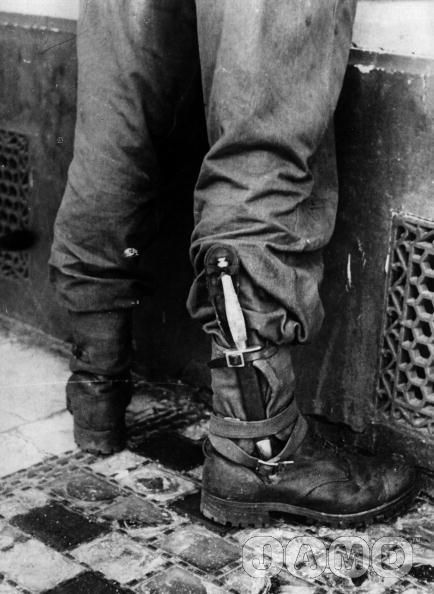
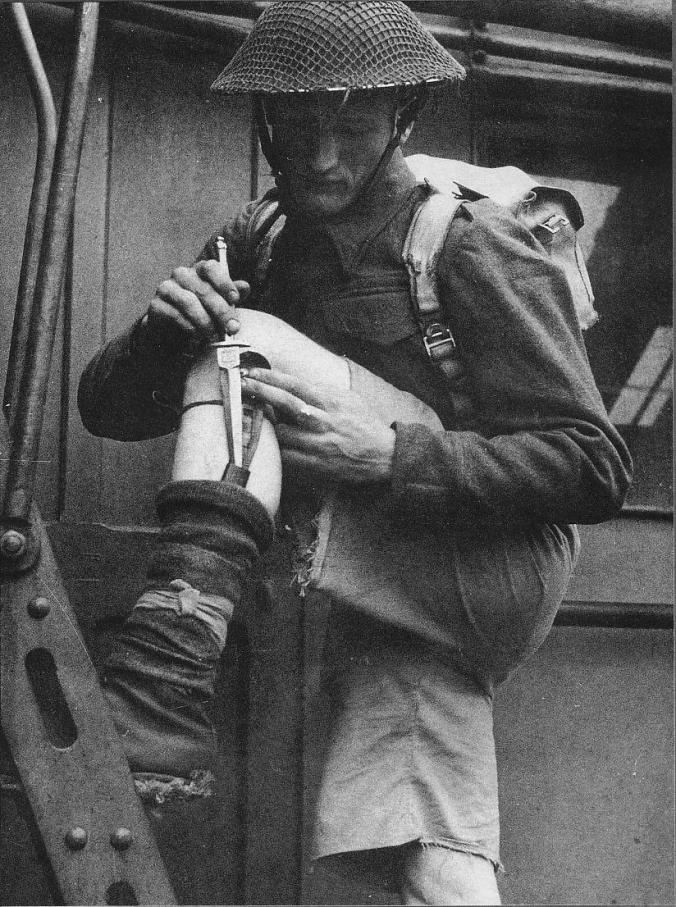
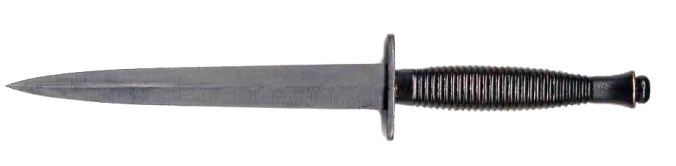
With how hard I am sometimes on inaccurate depictions of firearms and knives in crime fiction (I'm even writing a guide to crime fiction weapons for Writer's Digest) I run the risk of sounding hypocritical. Research is important, but I certainly cut some corners with Cleansing Eden. That's not really fair to the reader.
The crime fiction community is coming to the same conclusion. To quote the Do Some Damage post:
We read and write about mental health issues in very narrow terms in our field. It's a gimmick. An excuse. We want some death and some interesting mayhem, and a way to get there is with these impossible magical characters that we create, and then we throw in a suggestion of childhood trauma as if that is "paying the taxes" of examining cause and effect.
We like sociopaths as long as they serve plots, we like addicts as short-hand for failure, and people with extreme temper problems are good for sudden bursts of action. We like the moody protagonist with a fractured psyche. We like the killer who can live double lives. We like the self-loathing copper who is trying hard to self destruct.
Every writer is welcome to type outside the confines of reality - it is fiction, after all. But if the risk of inaccuracy isn't enough of a reason to re-examine these shortcuts, maybe the fact they've become cliche will be.
I'll do my part going forward. One of the characters in my next crime novel witnessed the gruesome death of a family member. This caused the character to develop post-traumatic stress disorder, and a key piece of the novel's plot hinges on finding this person help to deal with that. That the character lives in a rural area complicates matters. Every trait is backed up by research.
Posts like the one from criminologist Jennifer Chase and on Do Some Damage are waking me up to mental health issues in crime fiction. Writers, are you experiencing the same thing? Readers, do these things even matter to you? Let me know in the comments.
| Posted on June 5, 2013 at 8:50 AM |
comments (4)
|
"You Keep Using that Word. I Do Not Think It Means What You Think It Means."
Unless you have everything bookmarked, you've probably noticed the huge influx of short stories, novelettes and novellas on the major e-book retailer sites. This is due in part to short attention spans of both writers and readers, as well as an "anything goes" attitude toward publishing fiction e-books.
This isn't a post critical of those things. As my old journalism school instructors would say, "How long should a story be? Until it's done."
Some stories don't fit neatly into the confines of the novel or short story. So writers fudge the word counts and call it a "novella" or "novelette."
That said, there's a lack of understanding of what a novella is supposed to be.
It's Not a Word Count Thing, It's a Plot Structure Thing...But Still a Word Count Thing
Yes, a characteristic of a novella is its word count. It's either a short novel or a long short story, depending on how you want to think about it.
But that's secondary to the plot structure. A novella is a snapshot of a single event. It's the meat of the action. Everything else is tossed in front of a moving train, scraped off the tracks, dehydrated and snorted in short lines for writerly inspiration.
That means the usual story arcs, sub plots, character development and even the satisfying ending are removed. Only the action remains.
You need Adobe Flash Player to view this content.
"But That's Inconceivable!"
If this sounds like a bare bones, minimalist approach to a story, then you're on the right track.
Let's say a plot hinges on a bank robbery. A bunch of bad muthas decide to knock off a bank so they can pay a coyote to smuggle heroin across the U.S.-Mexico border in order to clear a debt with a drug lord who loaned them money to get one of the bad mutha's sister's a black market kidney from a prisoner who tried to rape her in high school. It's a revenge story, because the prisoner only had one kidney to begin with - before the forced organ donation in the prison shower.
Lots of moving parts in that story, right?
In a novella, the action would focus just on the bank robbery, or some other single event from that mess. It wouldn't be a revenge story necessarily, because the reader wouldn't see all those moving parts.
In a novel, all the moving parts could be included, complete with all the bells and whistles. It could be the revenge story.
In a short story, the rules aren't so clear cut, especially now that the format has experienced a creative renaissance with the rise of e-books and online magazines. If I was writing the example above, I'd keep the action on the bank robbery but flash back to the other events for context. It could be the revenge story. Or a bank robbery story. It would only have to be brief.
While waiting for a delayed flight earlier this week, I got to reading up the stories I've neglected on my phone's Kindle app.
One of them was The Becoming by Allan Leverone. It's the perfect example of the novella format done the right way. A tragedy at a mine unleashes a creature from the backwaters of hell. Hilarity ensues. (Just kidding, it's a creature-feature horror tale, and it's a lot of fun if you have a high gross factor tolerance.) It spurred this post.
On the crime fiction side, an indie author who knows the format in and out is Paul Brazill. I read a piece by him called The Gumshoe a while back, and I thought it was a brilliant example of a novella. I don't know if he ever got around to publishing it, though. Brazill's known more for his short stories, but if you spot a novella by him, be sure to check it out.
Can't I Just Call it What I Want to Call It?
Yes. You want subplots, arcs and the lot in your novella? Go ahead. This post was just explaning what a novella is supposed to be historically.
But don't rhyme "call it" with "call it." That's not a good rhyme. This is a good rhyme:
You need Adobe Flash Player to view this content.
| Posted on May 28, 2013 at 7:00 AM |
comments (0)
|
This guest post comes from B.R. Stateham. Check out his website or get the new e-book, Guilt of Innocence, available at all fine e-book retailers.But first, have a look at that cover. That's a custom illustration. Nice!
~Ben
Homicide detectives Turner Hahn and Frank Morales are back on duty in their new novel, Guilt of Innocence.
The two are investigating a couple of murders which pushes them to the limits of their wits. One case involves the death of a very successful corporate lawyer. A high priced corporate lawyer who happens to be married to a woman who heads the largest cosmetics firm in the country. How the murder took place is perplexing enough. But as more bodies begin to drop Turner and Frank soon realize they are facing a maniacal mastermind who may very well be smarter than both of them combined.
Twists and turns, dead ends and red herrings . . . with an ending that will truly be surprising. This case has it all. And this is only case number one!
Case number two involves the disappearance of a young girl fifteen years earlier. A Cold Case File. Except it is not a cold case any longer. The girl has returned. And now lies on a cold metal table in the morgue. Someone has gone out of their way to make the homicide look like a suicide. Apparently a crime syndicate is frantic to make sure neither Turner nor Frank find out the facts surrounding the girl's disappearance fifteen years earlier. A hit man is in town grimly eliminating everyone who may have known the girl. A hit man with orders to possibly rub out Turner and Frank as well.
And again the real killer is someone whom no one would have ever suspected.
Turner and Frank are at their best. Dry wit, interesting characters, lots of action, vivid imagery, and two genuine classic mysteries. All of it can be found in Guilt of Innocence. Find it anywhere ebooks are sold.
---
B.R. Stateham is a sixty-four year old curmudgeon who writes genre fiction. With an antiquarian's body yet with the mind of a fourteen year old boy, the author's imagination still wanders down dark alleys and mean streets looking for a dangerous rendezvous or dons a Federation uniform and straps on his waist a 20 megawatt laser blaster to go out and hunt Martian grave robbers.
| Posted on May 25, 2013 at 12:00 PM |
comments (0)
|
Exhibit A above is a purse made out of my crime thriller novel, Cleansing Eden. An uber-reader had this commissioned through a service called The Pocket-Book.
The panels of the purse are made from the covers and spine of the print book. The handles are made from the pages.
I'd never heard of such a thing before seeing this, but I hear book-purses (burses? pooks?) are pretty popular on Etsy.com. Here are a few others from over there.


Those examples were all hardcovers, but the Cleansing Eden burse (I've settled on burse) from the top is a softcover. So I suppose you could turn any book of yours into a purse. You just need to find the time, tools and talent to make it happen.
What other ways are books being hacked? Leave a note in the comments, I'm curious to know. (And, no, tinder doesn't count as a hack.)
| Posted on May 12, 2013 at 9:20 AM |
comments (0)
|
I plan to chronicle the steps I take as the Writer's Digest thriller/crime fiction weapons guide moves forward. The latest is submitting an expanded TOC (table of contents) to the editor this week.
On the outside, drafting a TOC seems like an almost trivial step. How hard could it be to scratch one out? It's just some chapter names and page numbers, right?
To readers, that's true. A TOC is just a leaping off point. It's a leaping off point for me, too. The difference is I have to make sure my jump looks more like Evel Knievel and not Wile E. Coyote.

Pictured: Why nine lives isn't always a good thing.
That's not to say there wasn't a TOC in the first place. WD's seen the entire thing, from the TOC to my B-I-O. But with the project now on the docket for a print release, the guide's approach needs to change. That's part of the conversation I had with the editor last week.
A revamped TOC is the natural place to start. Once we finalize exactly what's going to be in this puppy, I'll rent that cabin on Mars and leave the planet intermittenly. When I get my nose stuck in researching, double-checking, re-wording, run-it-past-ing, photo gathering, I sometimes have to remember to eat. The last time I went full-bore on this project back in January, things got a little Howard Hughes-y.
Fortunately, I can spend plenty of time back on planet Earth during this new leg. The completed 'script isn't due back until early next year. That doesn't mean I'm going to slack off. But it does mean I won't be repeating the January Crunch of 2013, either.
Nah, the weather's just a little too nice for that. The month of January was ideal for holing up in my office, so I, well, holed up in my office. I was also gunning to push this guide over the edge of even what I expected it to become. Now that the core of the project is in place, it's time to flesh everything out. I have the time to do this right, so that's what I'll do.
So long as I keep my inner Evel Knievel fed with copious amounts of easily digestible, fiberous, legume-based vittles and 6 a.m. coffee pots, it'll all work out.
| Posted on May 2, 2013 at 8:50 AM |
comments (3)
|
Big. Gal-damn. News.
It was premature when I announced earlier this year that Writer's Digest wanted to publish an e-book of mine about writing firearms and knives accurately in crime fiction. I'd noted 2013 as a possible release timeframe. It turns out that's not going to happen.
No, something much better developed since then.
In a meeting with Writer's Digest this week, the editor and I discussed turning the work - tentatively titled, The Thriller & Crime Writer's Guide to Firearms & Knives - into a formal print book for the second half of 2014. After reviewing my manuscript, the Writer's Digest team determined the guide needed the full works.
That means more photos, additional illustrations, moving around certain parts, expanding sections and generally transforming the project so it's suitable for print.
Yeah, it's more work. But it's the best kind of work. This is the first book deal at a major publisher I've secured, complete with all the bells and whistles that go with one.
Writer's Digest is putting a lot of faith in me to produce world-class quality. I intend to deliver. This won't be your garden variety, "Guns go boom, knives go stab-stab," writing manual. It'll be a practical reference that helps writers unfamiliar with firearms and knives pen weapons like pros. It's my labor of love. A gift back to the crime fiction community that's been so supportive to me over the years.
To keep things from getting too technical, it's loaded with just the right amount of gallows humor. I enlisted Maynard Soloman, my crusty and generally clueless RV-dwelling detective, to be my guinea pig. He gets shot, stabbed and bankrupted by even more medical bills. Because what could be more hilarious than medical debt? It was a pleasant surprise when the Writer's Digest editor mentioned how much Maynard's comic relief was appreciated.
Backing me up on this project is the staff at Gun Digest and BLADE. They've offered me full access to their publishing vaults. Gun Digest started publishing annual firearms books in 1944, with a magazine that started a few decades later. BLADE began publishing its knife magazine in 1973, then added annual books shortly thereafter. Between these two massive resources, the challenge will be to keep a lid on all the information I could mix into this project.
My comrads at Deer & Deer Hunting, Turkey & Turkey Hunting, Trapper & Predator Caller, Tactical Gear and Living Ready (the new national print magazine I helped launch) are also behind me on this project. All their books, magazines, TV shows and digital content are at my disposal.
If I can't turn out the best weapons guide for crime writers that's ever graced the bookshelves, it's time to hang it up.
My thanks to everyone who offered a kind word of support as this project developed. It's an exciting time for me. I want to share my journey as much as possible. Stay tuned!
~Ben
| Posted on April 23, 2013 at 10:05 PM |
comments (0)
|
I'm within striking distance of completing the first draft of my second novel. It's allllllmost there.
This actually doesn't mean anything. The real work is with editing. That can take as long as the original draft.
So that's my update on the novel. Once I get burned out on crime thriller writing, I'll switch back to crime humor and crank out a new Maynard story.
| Posted on April 11, 2013 at 7:30 AM |
comments (0)
|
A couple years back, I made a pretty terrific offer. It still stands today. If you donate any amount to the National Kidney Foundation, I'll send you e-book versions of my entire catalog for free. All you have to do is e-mail the receipt to me at bsobieck [at] journalist [dot] com.
It doesn't matter if it's $1 or $100. You get a crime thriller novel, a collection of Maynard Soloman short stories, some horror stories and other assorted literary mayhem.
This is one way I'm paying it forward. Three years ago this month, I received a kidney transplant from a living donor. That person is still alive and well. I would never reduce organ transplants and say they're like changing tires. But with the amount of research and experience out there, it's pretty close to that in the medical world.
Why NKF?
Despite these advances, people still die every day waiting for organs. The problem isn't with treatments or medicine. It's with supply. More than 100,000 people are waiting for a donor.
Sometimes this is because the matches are difficult to make. Other times it's because organs can't be used after a donor dies. More often, it's because there just aren't enough donors.
Why is that? Choosing to donate your organs as a living or cadaver donor is a personal decision. I don't fault anyone for opting not to donate. Recipients and doctors don't want coerced donors anyway. If you're not at 100 percent, don't do it.
But sometimes it just comes down to bad information. I've heard it all, and I debunk it when I find it. You have to be related to the recipient (Fact: Anyone with the right match can donate). Your life expectancy plummets if you give a kidney (Fact: You'll live normally with one kidney). You'll go bankrupt if you donate (Fact: Donors don't pay a dime).
The National Kidney Foundation is one of the foremost organizations debunking these myths. Check out this list of five organ donation myths it recently published.
It doesn't take a leap of logic to see how putting out good information will lead to more donations. And that's only one of the things NKF is doing. It raises funds for research, free screenings, lobbying and more.
That's why I'm so passionate about helping NKF. The day I received that kidney was the day I got my life back. It's only right that I use the writing made possible by the donation to keep those second chances coming.
One More Time: Here's How to Donate and Get Free E-Books
1) Donate any amount to the National Kidney Foundation here.
2) E-mail me the receipt at bsobieck [at] journalist [dot] com.
3) I'll e-mail you back with my entire e-book catalog.
Thank you!
| Posted on April 5, 2013 at 10:05 AM |
comments (0)
|
Do you want my job? Yes. You want my job. Here's why.
As some may know, I work full-time for F&W Media as an online editor. F&W is a publisher of magazines, books, e-books, TV shows and digital content. It also organizes popular events and conferences across the country. Everything focuses on enthusiast verticals. In other words, F&W is about people's passions, hobbies and creative aspirations.
Which means it's a cool place to work, full of people who enjoy the content they bring to market anyway. I know I do. I've worked with Deer & Deer Hunting, Deer & Deer Hunting TV, Turkey & Turkey Hunting, Trapper & Predator Caller, Gun Digest, Tactical Gear and BLADE. Outside of writing crime fiction, these are right in line with how I like to spend a weekend.
Most recently, I helped launch Living Ready, a new print magazine and online education hub focusing on self-sufficiency. It's a hot title. It's so hot, in fact, that I need help in other areas so I can concentrate on this fast-growing brand.
That's why F&W is taking submissions for my replacement right now. It's a good problem to have.
This really is a huge opportunity. F&W publishes a ton of cool brands, including crime fiction outfit Tyrus Books, Digital Book World and Writer's Digest. You could start in one spot and end up in another, just like I did with Living Ready. Heck, we even have a UK office. Who knows.
Click here to check out the job posting. You must be willing to move to central Wisconsin and know a bit about firearms. If you're hired, I know a great pizza place in Stevens Point you have to try out.
P.S. If you're qualified and seriously considering applying, shoot me an e-mail bsobieck [at] journalist [dot] com.
| Posted on March 28, 2013 at 8:45 AM |
comments (0)
|
Leroy Vaughn, a frequent contributor to my online mag Fingerprints, has a new short tale of true crime up today. If police officers getting frisky with bar wenches in a sleezy part of town is your cup of tea, you need to check this out.
Vaughn is a retired police officer himself, and he's full of great stories from his experiences. I'm fortunate that he's contributed so much to Fingerprints. A couple stories that were published on Fingerprints were even professionally recorded for the seminal Crime City Podcast. I'll get those up on the site later.
Click here to read, Another Day at the Short Stop.